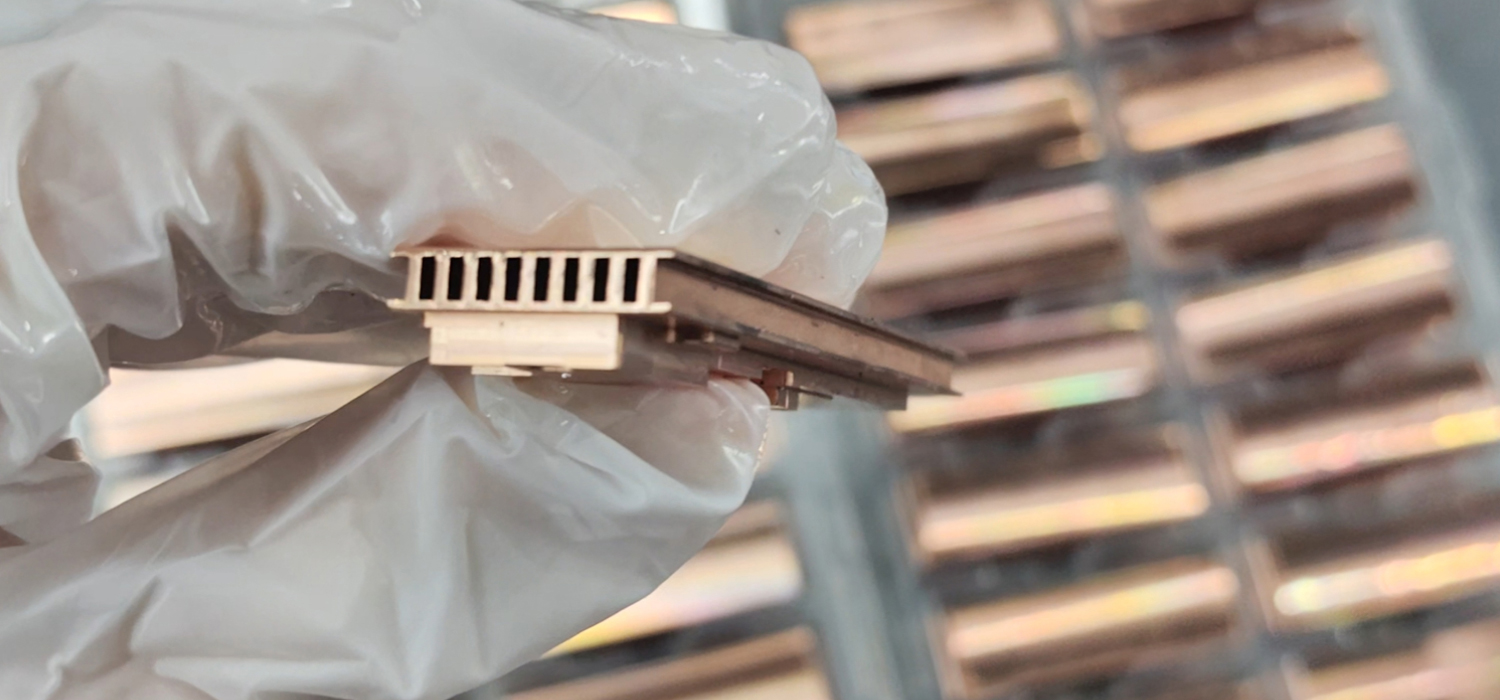

AI computing power exploded, and 1.6T optical modules entered the first year of commercial use
With the surge in demand for AI large-scale model training and inference, 1.6T optical modules are about to become mainstream in 2027, with a power density twice that of 800G, a heat flux density more than three times higher, and unprecedented heat dissipation pressure.
Traditional aluminum alloy solutions face heat dissipation bottlenecks
The thermal conductivity of aluminum alloy (160-200 W/m · K) can no longer cope with high heat flux, resulting in high junction temperature, which seriously affects the performance and service life of core devices such as lasers and DSPs. The thermal conductivity of pure copper can reach 380-400 W/(m · K), making it the best choice for the metal heat dissipation shell of 1.6T optical modules.
The traditional manufacturing process makes pure copper heat dissipation impossible to apply in batches
The traditional pure copper manufacturing process is widely used: forging, 3D printing, machining, limited by the complex structure of the optical module shell, which needs to be disassembled into multiple processes, which is a huge challenge in terms of production capacity and cost. The industry urgently needs a new technology to accelerate the commercial promotion of pure copper heat dissipation. After several rounds of all-round demonstration, MIM (metal powder injection molding) has absolute advantages in pure copper heat dissipation, and then the project is developed and released first in the industry.